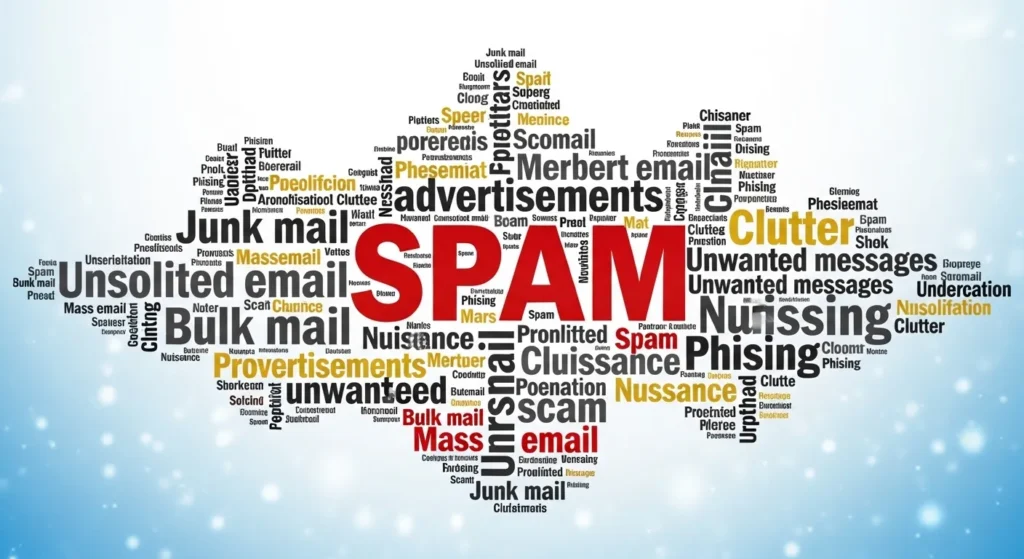
Have you ever opened your inbox and found dozens of unwanted messages? That’s called spam and it can be frustrating. Whether it’s emails, comments, or messages, spam is everywhere. So, understanding synonyms for spam can help you describe it better in daily conversations and writing.
In simple terms, spam means unwanted or irrelevant messages sent in bulk. For example, imagine getting the same promotional email 10 times a day. That’s spam. However, using the same word repeatedly can make your writing dull. That’s why learning similar words for spam is useful.
Moreover, knowing another word for spam helps you sound more natural and clear. For instance, instead of always saying “spam email,” you could say “junk mail” or “unsolicited message.” As a result, your communication becomes more engaging.
In this guide, you’ll discover easy synonyms for spam, their meanings, and how to use them in real life. So, let’s get started and improve your vocabulary step by step.
Featured Snippet
Spam refers to unwanted, irrelevant, or repeated messages sent in bulk, usually for advertising or malicious purposes. Common synonyms for spam include junk mail, unsolicited messages, and bulk messages.
These terms help describe unnecessary communication across emails, texts, and online platforms more clearly and naturally.
Why Learning Synonyms of Spam Matters
Learning synonyms for spam improves both your writing and speaking skills. First, it helps you avoid repeating the same word again and again. As a result, your content feels more professional and easier to read.
Moreover, different situations require different words. For example, “junk mail” is common for emails, while “unsolicited messages” sounds more formal. Therefore, knowing multiple options gives you flexibility.
In addition, using similar words for spam helps you communicate more clearly with a global audience. This is especially useful in emails, blogs, or workplace communication.
Synonyms of Spam
Here are some useful synonyms for spam and similar words for spam you can use in daily life:
Common Everyday Synonyms
1. Junk Mail
Meaning: Unwanted promotional messages sent in bulk.
Examples:
- I keep getting junk mail in my inbox every day.
- Please filter out junk mail automatically.
2. Unsolicited Messages
Meaning: Messages sent without permission.
Examples:
- These unsolicited messages are very annoying.
- I never signed up for these unsolicited emails.
3. Bulk Messages
Meaning: Messages sent to many people at once.
Examples:
- The company sent bulk messages to all users.
- Bulk messages often end up in spam folders.
4. Trash Mail
Meaning: Emails that are useless or unwanted.
Examples:
- Delete all trash mail immediately.
- My inbox is full of trash mail.
5. Promotional Messages
Meaning: Messages meant to advertise products or services.
Examples:
- I received too many promotional messages today.
- Promotional messages can sometimes be helpful.
Negative Tone Synonyms
6. Scam Messages
Meaning: Messages meant to trick or cheat people.
Examples:
- Be careful of scam messages online.
- He almost believed a scam message.
7. Phishing Emails
Meaning: Emails designed to steal personal information.
Examples:
- Never click links in phishing emails.
- Phishing emails look very real.
8. Fake Messages
Meaning: Messages that are not genuine or true.
Examples:
- Ignore fake messages on social media.
- Many fake messages spread quickly.
Informal & Casual Synonyms
9. Spammy Content
Meaning: Content that looks like spam.
Examples:
- This website has spammy content.
- Avoid writing spammy comments.
10. Clutter Mail
Meaning: Messages that fill up space unnecessarily.
Examples:
- My inbox is full of cluttered mail.
- Remove clutter mail regularly.
Quick Synonyms Table
| Word | Meaning | Example |
| Junk Mail | Unwanted emails | I deleted all junk mail. |
| Unsolicited Mail | Sent without permission | I received unsolicited mail. |
| Bulk Messages | Sent to many people | Bulk messages are annoying. |
| Scam Messages | Fraudulent communication | Avoid scam messages. |
| Trash Mail | Useless emails | Trash mail fills my inbox. |
| Promotional Mail | Advertising emails | Promotional mail is frequent. |
How to Choose the Right Synonym
Choosing the right word depends on the situation. For example, if you are talking casually, “junk mail” works best. However, in formal writing, “unsolicited messages” sounds more professional.
Moreover, if the message is dangerous, you should use terms like “phishing emails” or “scam messages.” On the other hand, if it’s just annoying but harmless, “bulk messages” or “promotional mail” is more suitable.
For instance:
- At work: “We received many unsolicited messages.”
- With friends: “My inbox is full of junk mail.”
Therefore, always think about tone and context before choosing a synonym.
Frequently Asked Questions
1. What are the best synonyms for spam?
Some of the best synonyms for spam include junk mail, unsolicited messages, and bulk messages. These are easy to use and widely understood.
2. What is another word for spam in emails?
Another word for spam in emails is “junk mail.” However, you can also use similar words for spam like promotional emails or unsolicited mail.
3. Are spam and phishing the same?
No, they are different. Spam is unwanted messages, while phishing emails are harmful and try to steal information.
4. Can I use formal synonyms for spam?
Yes, in formal writing, use terms like unsolicited messages or bulk communication. These sound more professional.
Conclusion
Learning synonyms for spam is simple but very useful. It helps you improve your vocabulary, write better, and communicate clearly. Moreover, using different words like junk mail, bulk messages, or unsolicited emails makes your language more engaging.
However, always choose the right word based on the situation. For example, use formal terms in professional settings and simple words in daily conversations. As a result, your communication becomes more effective.
Start using these synonyms today, and you’ll notice a big improvement in how you express ideas.

I am Aiden, a passionate writer at Synonyms who specializes in vocabulary, synonyms, and word meanings. I create clear, helpful content that makes language easier to understand for readers worldwide.