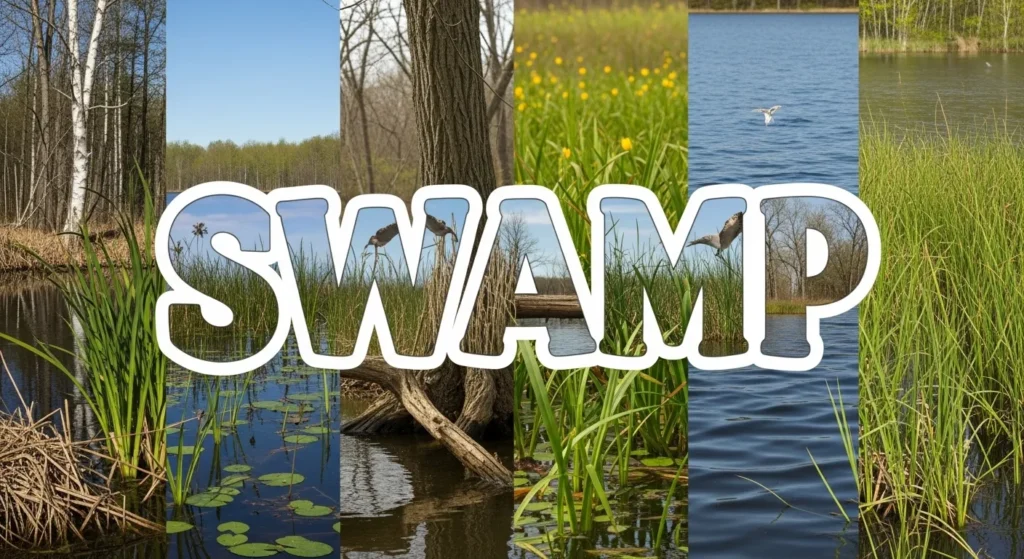

Have you ever walked through a place full of water, mud, and tall grass? Your shoes sink a little with every step. The ground feels soft and wet. Many people call this place a swamp (synonyms for swamp).
A swamp is a type of wet land where water stays on the ground for a long time. Trees, plants, and animals live in this wet area. You may see a swamp near rivers, lakes, or forests.
Learning synonyms for swamp can help you describe nature better. Students can write stronger essays. Bloggers and content writers can create more interesting articles. Even daily English users can speak and write with more variety.
In this guide, you will learn 50 simple synonyms for swamp with easy meanings and real-life examples.
Bog
Meaning:
A wet and soft land where the ground is muddy.
Examples:
- The hikers slowly walked across the bog.
- My boot got stuck in the bog.
Marsh
Meaning:
A wet land with grass and plants growing in shallow water.
Examples:
- Birds live in the marsh near the lake.
- We saw frogs jumping in the marsh.
Wetland
Meaning:
Land that stays wet most of the time.
Examples:
- The wetland is home to many animals.
- Farmers protect the wetland near their fields.
Fen
Meaning:
A flat wet land with grass and water.
Examples:
- The fen looks green and quiet.
- Ducks swim across the fen.
Mire
Meaning:
Deep wet mud where things can get stuck.
Examples:
- The truck got stuck in the mire.
- Heavy rain turned the path into mire.
Quagmire
Meaning:
Very soft wet mud that is hard to walk through.
Examples:
- After the storm, the road became a quagmire.
- His shoes sank into the quagmire.
Morass
Meaning:
A muddy and confusing wet area.
Examples:
- The old trail leads into a morass.
- We avoided the deep morass.
Slough
Meaning:
A swampy place with slow water and mud.
Examples:
- Fish swim in the slough.
- The canoe moved slowly through the slough.
Bayou
Meaning:
A slow-moving water area in a swamp.
Examples:
- The boat floated along the bayou.
- Trees grow thick around the bayou.
Backwater
Meaning:
Still water that collects away from the main river.
Examples:
- The fish hide in the backwater.
- The boat rested in the calm backwater.
Swampland
Meaning:
Land that is full of swamp and water.
Examples:
- The map shows a large swampland.
- Few houses stand in the swampland.
Marshland
Meaning:
Land covered with marsh plants and shallow water.
Examples:
- Birds fly over the marshland.
- The marshland looks green in spring.
Mudflat
Meaning:
Flat land covered with soft wet mud.
Examples:
- Crabs crawl on the mudflat.
- The tide left a wide mudflat.
Peatland
Meaning:
Wet land with thick layers of dead plants in the soil.
Examples:
- The peatland stays wet all year.
- Scientists study plants in the peatland.
Delta
Meaning:
Wet land where a river spreads before reaching the sea.
Examples:
- The river delta grows many plants.
- Farmers grow rice in the delta.
Floodplain
Meaning:
Low land that floods when the river rises.
Examples:
- The floodplain fills with water each year.
- Farmers avoid building on the floodplain.
Waterlogged Land
Meaning:
Land soaked with too much water.
Examples:
- The field became waterlogged land.
- Plants struggle in waterlogged land.
Sump
Meaning:
A low place where water collects.
Examples:
- Rain filled the sump behind the house.
- The sump stays wet after storms.
Bogland
Meaning:
A large area of bog.
Examples:
- The road cuts through bogland.
- Sheep walk slowly across the bogland.
Mudhole
Meaning:
A small hole full of mud and water.
Examples:
- Kids jumped over the mudhole.
- The car splashed through the mudhole.
Swale
Meaning:
A low wet place between small hills.
Examples:
- Water gathered in the swale.
- Flowers grow well in the swale.
Lagoon
Meaning:
A shallow water area near the sea.
Examples:
- Fish swim in the lagoon.
- Boats rest in the calm lagoon.
Tideland
Meaning:
Land covered by water during high tide.
Examples:
- Crabs move across the tideland.
- The tideland fills when the tide rises.
Marshy Ground
Meaning:
Ground that is soft, wet, and grassy.
Examples:
- The trail crosses marshy ground.
- Boots help when walking on marshy ground.
Water Meadow
Meaning:
A grassy field that often floods with water.
Examples:
- Cows graze on the water meadow.
- The river floods the water meadow each spring.
Reed Bed
Meaning:
A wet place full of tall reed plants.
Examples:
- Birds hide in the reed bed.
- The wind moves the reed bed.
Muddy Lowland
Meaning:
Low land filled with mud and water.
Examples:
- The muddy lowland slows hikers down.
- Rain turns the valley into muddy lowland.
Damp Ground
Meaning:
Land that stays slightly wet.
Examples:
- Mushrooms grow on damp ground.
- The path crosses damp ground.
Soft Ground
Meaning:
Ground that sinks under your feet.
Examples:
- The horse stepped carefully on soft ground.
- The tent sank into soft ground.
Water Field
Meaning:
A field covered with water.
Examples:
- The rice grows in a water field.
- The rain turned the farm into a water field.
Flooded Land
Meaning:
Land covered with water after heavy rain.
Examples:
- The road passed through flooded land.
- Boats moved across the flooded land.
Marsh Field
Meaning:
A field that looks like a marsh.
Examples:
- The marsh field attracts many birds.
- The farmer avoids the marsh field.
Damp Meadow
Meaning:
A meadow that stays wet.
Examples:
- Butterflies fly over the damp meadow.
- The damp meadow shines after rain.
River Marsh
Meaning:
A marsh near a river.
Examples:
- The river marsh is full of frogs.
- We walked beside the river marsh.
Coastal Marsh
Meaning:
A marsh near the ocean.
Examples:
- The coastal marsh protects fish.
- Birds nest in the coastal marsh.
Low Wetland
Meaning:
A low area that holds water.
Examples:
- The low wetland fills during rain.
- Trees grow slowly in the low wetland.
Muddy Marsh
Meaning:
A marsh with thick mud.
Examples:
- The muddy marsh smelled earthy.
- We stepped slowly in the muddy marsh.
Wet Hollow
Meaning:
A small valley that stays wet.
Examples:
- Water gathered in the wet hollow.
- The wet hollow grows tall grass.
Damp Valley
Meaning:
A valley that stays moist and wet.
Examples:
- The damp valley feels cool.
- Fog sits over the damp valley.
River Swamp
Meaning:
A swamp located near a river.
Examples:
- Trees stand deep in the river swamp.
- Boats move slowly through the river swamp.
Jungle Swamp
Meaning:
A swamp inside a dense jungle.
Examples:
- The jungle swamp is full of insects.
- Monkeys live near the jungle swamp.
Mangrove Swamp
Meaning:
A swamp filled with mangrove trees.
Examples:
- Fish hide in the mangrove swamp.
- The mangrove swamp protects the coast.
Shallow Marsh
Meaning:
A marsh with very shallow water.
Examples:
- Birds walk through the shallow marsh.
- The shallow marsh shines in sunlight.
Water Marsh
Meaning:
A marsh with visible standing water.
Examples:
- Frogs jump in the water marsh.
- The water marsh smells fresh.
Swamp Forest
Meaning:
A forest growing in swamp water.
Examples:
- The swamp forest is very quiet.
- Tall trees grow in the swamp forest.
Wet Forest
Meaning:
A forest where the ground stays wet.
Examples:
- The wet forest feels cool and dark.
- Ferns grow across the wet forest.
Mud Marsh
Meaning:
A marsh filled with thick mud.
Examples:
- The mud marsh slowed our steps.
- Birds searched the mud marsh for food.
Rain Marsh
Meaning:
A marsh formed after heavy rain.
Examples:
- The rain marsh formed overnight.
- Ducks landed on the rain marsh.
Pond Marsh
Meaning:
A marsh that grows around a pond.
Examples:
- Grass spreads around the pond marsh.
- Frogs sing in the pond marsh.
Lake Marsh
Meaning:
A marsh that forms near a lake.
Examples:
- The lake marsh attracts many birds.
- We saw deer near the lake marsh.
Conclusion
Learning synonyms for swamp helps you write more clearly and creatively. When you know many words, your essays, blog posts, and stories become more interesting.
Students can improve school writing. Bloggers and content writers can make richer articles. Daily English users can speak with more confidence.
Try using these new (synonyms for swamp) words in emails, essays, and daily conversations. The more you practice, the stronger your English will become.