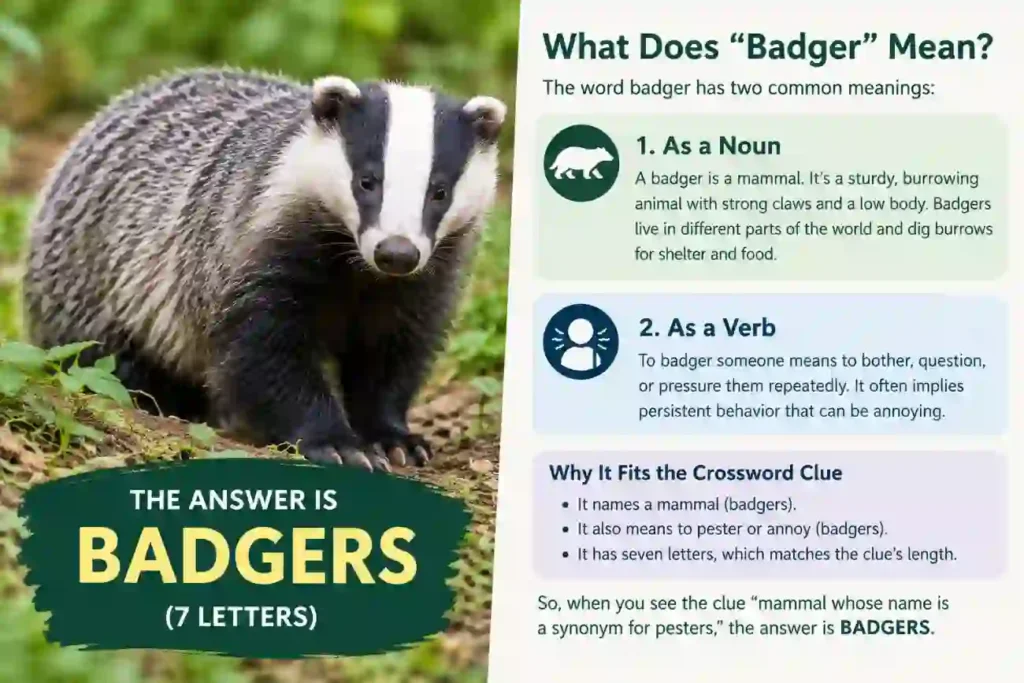
The answer to “mammal whose name is a synonym for pesters” is BADGERS. This seven-letter word has two meanings: it refers to more than one badger, a burrowing mammal, and it describes repeatedly bothering or annoying someone. The clue uses wordplay to connect an animal name with a common English verb.
Key Takeaways
- BADGERS is the seven-letter crossword answer.
- A badger is a mammal known for its sturdy body and digging ability.
- To badger someone means to bother, question, or pressure them repeatedly.
- The clue relies on a word that works as both a noun and a verb.
- Letter counts and crossing letters can help confirm the answer.
What Is the Answer to the Crossword Clue?
If you are searching for a mammal whose name is a synonym for “pesters,” the answer is BADGERS.
The clue combines animal knowledge with vocabulary. In its noun form, badgers is the plural of badger, the name of a mammal. As a verb, badgers describes the action of repeatedly bothering someone.
This makes the word a natural fit for a crossword puzzle. Instead of asking for the name of an animal alone, the clue asks you to recognize a second meaning hidden in the same word.
Crossword answer databases identify BADGERS as the solution to the seven-letter clue used in the New York Times Mini crossword on April 4, 2026.
Why BADGERS Is the Correct Answer
The answer fits for three simple reasons:
- It is named after a mammal. A badger is a stocky, burrowing mammal.
- It matches the verb. To badger someone means to pester that person persistently.
- It has seven letters. BADGERS matches the length specified by the crossword clue.
The plural form matters here. The clue says “mammals,” and the answer uses the plural noun badgers. At the same time, the spelling matches the third-person singular verb, as in “She badgers him with questions.”
That double meaning is the key to solving the puzzle.
What Does the Word “Badger” Mean?
The word badger has two common meanings in English. One refers to an animal, while the other describes a repeated action toward another person.
Understanding both definitions makes the crossword answer easier to remember.
Badger as a Noun
A badger is a sturdy mammal with a relatively low body, short legs, strong claws, and a body shape suited to digging. Several kinds of badgers live in different parts of the world.
The American badger lives in North America and is particularly well adapted to digging burrows. It belongs to the weasel family, Mustelidae.
Badgers generally have powerful forelimbs that help them dig for food and create underground shelters. Their diet varies by species, but it can include insects, small animals, and other available food sources.
Here are a few examples of the noun in everyday sentences:
- Singular: We saw a badger near the edge of the field.
- Plural: The badgers dug into the loose soil.
- Descriptive: The badger used its strong claws to dig a burrow.
In these sentences, badger or badgers refers to the animal itself.
Badger as a Verb
As a verb, badger means to bother, pressure, or question someone persistently. The action usually involves repeated requests, questions, or attempts to persuade another person.
For example:
- The children badger their parents for extra screen time.
- Reporters badgered the official with repeated questions.
- My brother badgers me whenever he wants to borrow my headphones.
In each example, someone continues asking, questioning, or bothering another person.
The verb can also appear in different forms:
| Word form | Example |
| Badger | Please do not badger your friend. |
| Badgers | He badgers his sister about the game. |
| Badgered | She badgered her manager for an answer. |
| Badgering | They kept badgering us with questions. |
Notice how badgers appears in the present tense when the subject is singular, as in “He badgers his sister.” This is the exact spelling used in the crossword answer.
Why Does “Badgers” Mean “Pesters”?
The connection comes from the verb to badger. English speakers use it to describe persistent behavior that annoys or pressures someone.
Imagine a student who asks a teacher the same question again and again, even after receiving an answer. Someone might say, “The student keeps badgering the teacher.”
In that sentence, badgering means repeatedly bothering the teacher. The word does not refer to an animal performing an action.
The verb is especially useful when ordinary words such as ask or remind do not fully describe the situation. It suggests persistence and often carries a negative tone.
Compare these examples:
- Ask: Maya asked her friend to help.
- Pester: Maya repeatedly asked her friend to help.
- Badger: Maya badgered her friend until the friend agreed to help.
The last example emphasizes repeated pressure. That is why badgers can serve as a synonym for pesters in a crossword clue.
How to Solve Similar Crossword Clues
Animal-related crossword clues sometimes test more than your knowledge of wildlife. They may use a word that has an additional meaning as a verb, adjective, or common expression.
Use these steps when you encounter a similar clue.
1. Check the Number of Letters
Start with the required answer length. If the puzzle asks for seven letters, BADGERS is a strong candidate because it contains seven letters.
A correct definition is not enough if the word does not fit the available spaces.
2. Look for Multiple Meanings
Ask yourself whether the animal’s name can also describe an action.
For example, badger can mean a mammal or the act of persistently bothering someone. This kind of double meaning appears frequently in word puzzles.
3. Identify the Verb in the Clue
Words such as pesters, annoys, bothers, and harasses describe actions. They may signal that the answer also functions as a verb.
In this case, the clue’s use of “pesters” points directly toward the verb badgers.
4. Use Crossing Letters
Fill in any answers you already know. The intersecting letters can confirm whether BADGERS fit or reveal that another solution is needed.
For example, if the third letter must be D and the last letter must be S, those crossings support the proposed answer.
5. Check the Grammar
Pay attention to whether the clue uses a singular or plural form.
“Pester” matches badger, while “pesters” matches badgers in the relevant verb form. Crossword clues often use grammatical clues to narrow the options.
Other Synonyms for “Pesters”
Although BADGERS is the answer to this particular clue, many other words can mean pesters. The best choice depends on the number of letters and the surrounding clues.
| Synonym | Meaning | Letters |
| Bugs | Annoys or bothers | 4 |
| Nags | Repeatedly asks or complains | 4 |
| Annoys | Irritates someone | 6 |
| Bothers | Disturbs or troubles | 7 |
| Badgers | Persistently bothers | 7 |
| Harasses | Repeatedly troubles or intimidates | 8 |
| Torments | Causes ongoing distress | 8 |
These alternatives are not interchangeable in every situation. For example, harasses can describe more serious or intimidating conduct, while nags often refers to repeated reminders or complaints.
For the specific mammal clue, however, BADGERS is the intended seven-letter answer.
Common Mistakes When Solving This Clue
Even a short crossword clue can cause confusion. These are some mistakes to avoid.
Looking only for an animal: A clue may test a word’s secondary meaning rather than its biological definition. Consider both meanings before choosing an answer.
Ignoring the letter count: A word such as badger has six letters, but the clue asks for the plural form badgers, which has seven.
Assuming every synonym is equally suitable: Words such as bugs, nags, and annoys can mean pesters, but they do not name mammals. The animal requirement narrows the answer.
Forgetting the grammatical form: The plural noun badgers and the verb badgers share the same spelling. That overlap makes the clue work.
A useful solving habit is to check the definition, word length, and grammar together rather than relying on just one clue element.
Frequently Asked Questions
What is the mammal whose name is a synonym for pesters?
The answer is BADGERS, a seven-letter word. A badger is a mammal, and badgers can also mean repeatedly bothers or annoys someone. The clue relies on these two meanings to create a simple vocabulary-based crossword puzzle.
What is the seven-letter answer to “mammals whose name is a synonym of pesters”?
The answer is BADGERS. It fits the seven-letter requirement and connects the animal name with the verb meaning to pester someone persistently.
Does badger mean pester?
Yes. As a verb, badger means to bother, question, or pressure someone repeatedly. For example, “He badgers his parents for a new bicycle” means he keeps asking them for one. The word can suggest that the repeated requests have become annoying.
Is a badger a mammal?
Yes. Badgers are mammals in the weasel family, Mustelidae. They have sturdy bodies, short legs, and strong claws that help them dig. Different species live in different regions, and the American badger is native to North America.
What are some synonyms for pesters?
Common synonyms include bothers, annoys, nags, bugs, and harasses. The best synonym depends on context. In this crossword clue, BADGERS is the correct answer because it also names a mammal and matches the required seven letters.
Why do crossword clues use words with two meanings?
Crossword creators often use words with multiple meanings to make clues more interesting. A single word may describe an animal in one context and an action in another. Recognizing both meanings helps solvers understand the wordplay and find an answer that fits the clue’s definition and letter count.
Final Answer
The answer to “mammal whose name is a synonym for pesters” is BADGERS.
It contains seven letters and works in two ways: badgers are mammals, while badgers also means persistently bothers or annoys someone.
When you encounter similar crossword clues, look for words with double meanings, check the letter count, and use crossing letters to confirm your solution.

I am Alexander, a passionate writer and language enthusiast at Synonyms. I specialize in creating clear, helpful content about synonyms, word meanings, and language differences to make English easier for everyone.