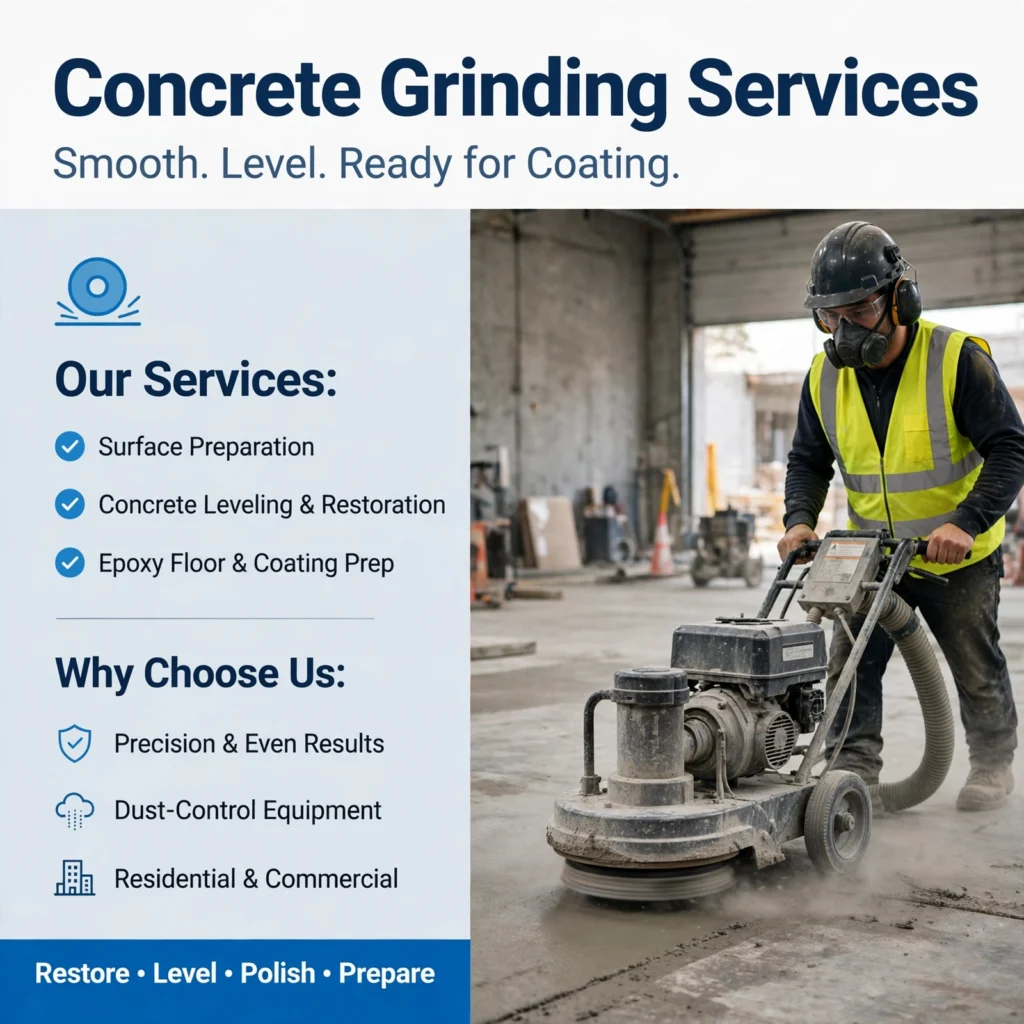

Plenty of Melbourne homes and workplaces have a perfectly good concrete slab sitting under a few stains, a patchy coating or some uneven spots. Concrete Grinding in Melbourne fixes all of that, and it’s often quicker and cheaper than people expect. It can leave you with a clean, flat floor you can use as is, or a solid base for a new finish. This guide covers how grinding works, where it’s used and how to pick a contractor.
What Is Concrete Grinding?
Grinding means running a heavy machine fitted with diamond-tipped discs across the slab. The discs shave off a thin layer, taking out old paint, glue and rough patches and leaving a clean, even surface.
How the Process Works
It starts with a walk around the slab. The contractor checks for cracks, joints, damp spots and old coatings, and asks what you want the floor to look like in the end. Then the machines go over the surface several times, starting with coarse diamond discs to take off the tough stuff and moving to finer ones for a smoother result. Cracks and small holes get filled along the way, and the whole area is vacuumed at the end.
Wet vs Dry Grinding
Wet grinding uses water to keep the tools cool and the dust down, and it’s the usual choice when a floor’s being polished. Dry grinding hooks the machine up to a strong dust extractor and works faster for stripping coatings and glue, so it suits indoor jobs where you want things tidy. Your contractor will pick whichever suits your slab and your timeline.
Benefits of Concrete Grinding
Most people notice the difference the minute they walk across the finished floor.
A Smooth, Level Surface
Slabs pick up ridges, trowel marks and low spots over the years. Grinding takes those down, so the floor ends up flat. That helps if you’re rolling trolleys, stacking shelves or putting a workbench in the garage, and it gives any new floor covering a much better start.
Better Adhesion for Coatings
Epoxy, sealers and paint stick best to a clean, slightly rough surface. Grinding strips off old coatings and the weak, chalky top layer that sometimes sits on new concrete, which gives the new product something solid to grab. A well-prepared slab means the coating looks better and lasts longer, and it’s the step the pros never skip.
Polished Looks with Low Maintenance
Keep going with finer discs and the concrete takes on a soft satin shine, or a glossy one if you prefer. Polished floors only need a mop and a neutral cleaner, they bounce light around a room and they cost far less than most flooring. A lot of people choose them because they like the honest, industrial look.
Where Concrete Grinding Is Used Around Melbourne
You’ll find ground concrete just about everywhere, from backyards to big sheds out west.
Homes: Driveways, Garages and Patios
The garage is the most common starting point. Grind the slab, add a sealer or epoxy, and you’ve got a bright, clean space that’s easy to sweep. Driveways, paths and alfresco areas also come up nicely, especially with a satin finish or a bit of exposed aggregate showing through. It’s a popular job before a sale, since the outside looks tidy and well looked after.
Commercial and Industrial Spaces
Warehouses, showrooms, cafés, car parks and shops all use grinding. A level floor is easier on forklifts and trolleys, a polished one looks sharp and cleaning takes a fraction of the time. Plenty of businesses book the work for a weekend or after closing, so there’s very little interruption to trade.
Grinding, Polishing or Resurfacing: Which Is Right?
The right finish depends on what your slab looks like now and what you want it to look like. A short chat with a specialist usually settles it.
When Grinding Is Enough
If your concrete is in good shape and you just want it clean and level, or you’re planning to seal, paint or apply epoxy, grinding on its own might be all you need. It’s also the go-to for removing old glue, paint and stains. For a lot of jobs, it’s the most economical way to get a fresh floor.
When to Add a Polish or Overlay
Want a showroom shine? Add extra polishing steps and a densifier, which hardens the surface and brings up the gloss. If the slab has big variations in colour or texture, or you want a decorative finish, a thin overlay or micro-topping gives you a clean, even canvas to work with. A good contractor will look at your slab and show you samples before you decide.
Choosing a Concrete Grinding Contractor
A few straightforward questions will point you toward the right team.
Experience and Equipment
Look for a business that does concrete prep every day, not as a sideline. Ask to see photos of recent jobs similar to yours, or better still, visit one. Ask what machines they use. Modern planetary grinders with quality diamond tooling leave a more even finish than older gear. Honest contractors are happy to talk shop.
Safety and Dust Control
Concrete dust contains very fine particles, so professionals use dust extractors, proper vacuums and protective gear. In Victoria, WorkSafe has rules about managing silica dust, and reputable contractors follow them as a matter of course. Ask how they’ll contain dust and protect your furniture and belongings. A tidy site is a good sign.
Quotes and Aftercare
Get a written quote that spells out the area, the finish, the number of grinding passes and anything else included, like sealer. That makes it easy to compare two or three businesses. Ask how soon you can walk on the floor, drive on it or move furniture back. A good contractor will also give you simple cleaning tips so the floor keeps looking sharp.
Conclusion
Concrete grinding turns an ordinary slab into something smooth, tough and good to look at, and the results tend to last. Pick a contractor who knows the job and explains it clearly, and you’ll be happy with the outcome. If you’d like to talk about your floor, our team at Premium Concrete Resurfacing would be glad to come out, take a look and give you a quote.