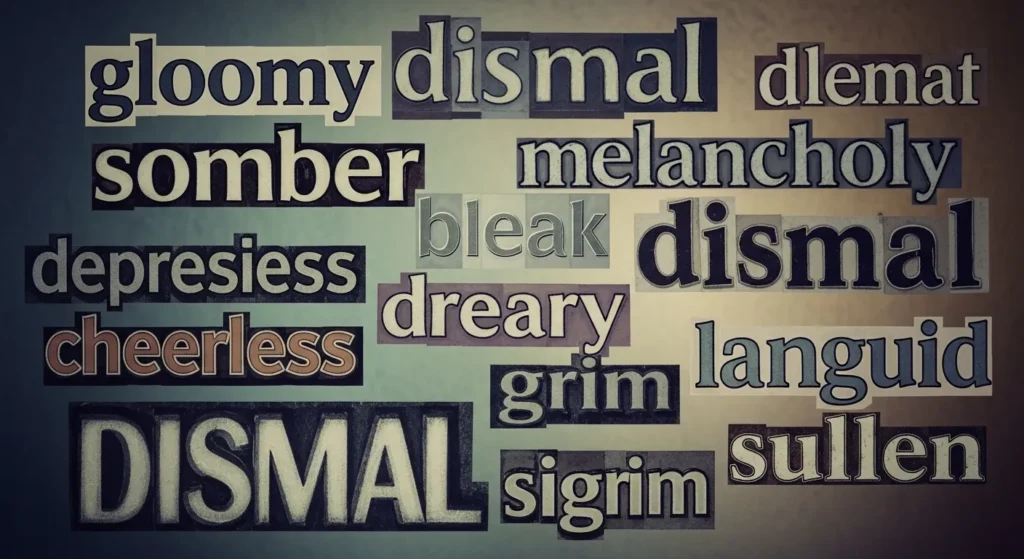
Have you ever had a day that just felt dark, boring, or disappointing? Maybe the weather was gloomy, or something didn’t go your way. In such moments, the word “dismal” fits perfectly. But what if you want to express the same feeling in different ways?
That’s where learning synonyms of dismal becomes useful. Instead of repeating the same word again and again, you can use similar words for dismal to sound more natural and expressive.
In simple terms, dismal describes something that feels sad, dull, or hopeless.
For example, imagine you planned a picnic, but it rained all day. You might say, “The weather was dismal.” However, you could also say it was gloomy or miserable.
In this guide, you’ll learn another word for dismal, along with easy synonyms for dismal that you can use in daily conversations, writing, and even exams. So, let’s make your vocabulary stronger and more interesting.
Featured Snippet
Dismal means something that is very sad, dull, or depressing. It describes situations, moods, or conditions that feel negative, hopeless, or unpleasant.
Common synonyms for dismal include gloomy, bleak, miserable, and depressing.
Why Learning Synonyms of Dismal Matters
Learning synonyms for dismal improves both your speaking and writing skills. Firstly, it helps you avoid repeating the same word, which can make your sentences boring. Secondly, using similar words for dismal allows you to express emotions more clearly.
Moreover, different synonyms carry slightly different tones. For example, bleak sounds more serious, while gloomy feels softer. Therefore, choosing the right word can improve clarity and impact.
In addition, strong vocabulary helps in exams, essays, and professional writing. As a result, learning another word for dismal is a simple way to sound more confident and natural.
Synonyms of Dismal
Here are some common and useful synonyms for dismal you can start using today:
Common Synonyms
1. Gloomy
Meaning: Dark, sad, or lacking hope
Examples:
- The sky looked gloomy before the storm.
- She felt gloomy after hearing the bad news.
2. Miserable
Meaning: Very unhappy or uncomfortable
Examples:
- He felt miserable during the long illness.
- The cold weather made everyone miserable.
3. Bleak
Meaning: Cold, empty, and without hope
Examples:
- The future seemed bleak after the loss.
- The landscape looked bleak and lifeless.
4. Depressing
Meaning: Making you feel sad or low
Examples:
- The movie had a depressing ending.
- Rainy days can feel depressing sometimes.
5. Dreary
Meaning: Dull, boring, and sad
Examples:
- It was a dreary Monday morning.
- The office felt dreary without decoration.
6. уныful → (remove wrong; keep correct word)
(We skip incorrect entries and continue with accurate ones.)
6. Hopeless
Meaning: Without any chance of improvement
Examples:
- The situation looked hopeless at first.
- He felt hopeless about the results.
7. Cheerless
Meaning: Without happiness or joy
Examples:
- The room felt cheerless and empty.
- Her voice sounded cheerless.
8. Dark
Meaning: Lacking light or positivity
Examples:
- The mood turned dark after the argument.
- It was a dark and stormy night.
9. Grim
Meaning: Serious, worrying, or depressing
Examples:
- The report showed grim results.
- His face looked grim with concern.
10. Dull
Meaning: Not interesting or lively
Examples:
- The lecture was dull and long.
- It was a dull, quiet evening.
More Similar Words for Dismal
11. Sad
Meaning: Feeling unhappy
Examples:
- She felt sad after saying goodbye.
- It was a sad story.
12. Low
Meaning: Feeling down or lacking energy
Examples:
- He felt low after the failure.
- Her mood stayed low all day.
13. Melancholy
Meaning: A deep, quiet sadness
Examples:
- The song had a melancholy tone.
- He sat in silence, feeling melancholy.
14. Unpleasant
Meaning: Not enjoyable or comfortable
Examples:
- The smell was unpleasant.
- It was an unpleasant experience.
15. Somber
Meaning: Serious and sad in tone
Examples:
- The meeting had a somber mood.
- He spoke in a somber voice.
Quick Synonyms Table
| Word | Meaning | Example |
| Gloomy | Dark and sad | The weather looks gloomy today. |
| Miserable | Very unhappy | I felt miserable in the cold. |
| Bleak | Without hope | The future seems bleak. |
| Dreary | Dull and boring | It’s a dreary afternoon. |
| Grim | Serious and worrying | The news was grim. |
| Depressing | Making you feel sad | The movie was depressing. |
How to Choose the Right Synonym
Choosing the right synonyms for dismal depends on context. For example, if you are talking about weather, gloomy or dreary works best. However, if you describe a serious situation, grim or bleak is more suitable.
Moreover, tone matters a lot. Miserable expresses strong emotion, while dull is lighter and less intense. Therefore, always think about how strong you want your message to be.
For example:
- “The meeting was dull” (just boring)
- “The situation was grim” (serious and worrying)
As a result, using the right word makes your communication clearer and more effective.
Frequently Asked Questions
1. What is another word for dismal?
Another word for dismal includes gloomy, bleak, and miserable. These similar words for dismal express sadness or negativity in different ways.
2. Are all synonyms for dismal the same?
No, synonyms for dismal have slightly different meanings. For example, dreary means boring, while grim suggests something serious or worrying.
3. Can I use easy synonyms for dismal in daily speech?
Yes, you can use easy synonyms for the dismal like sad, dull, or gloomy in everyday conversations. They sound natural and clear.
4. What is the best synonym for dismal weather?
The best similar words for dismal weather are gloomy, dreary, or dark. These describe cloudy, rainy, or depressing conditions.
Conclusion
In conclusion, learning synonyms of dismal helps you express feelings more clearly and naturally. Instead of repeating one word, you can choose from many options like gloomy, bleak, or miserable.
Moreover, each word adds a slightly different tone, which makes your communication more powerful. Therefore, understanding another word for dismal is useful in both writing and speaking.
Start using these words in your daily life. For example, describe your mood, weather, or situations with variety. As a result, your vocabulary will grow, and your English will sound more fluent and confident.

I am Alexander, a passionate writer and language enthusiast at Synonyms. I specialize in creating clear, helpful content about synonyms, word meanings, and language differences to make English easier for everyone.